

Demo-Ethno-Anthropological
MUSEUM OF RURAL LIFE GAVIGNANO
GAVIGNANO
P.zza dei Caduti, 1
Palazzo di corte
MUSEUM OF RURAL LIFE GAVIGNANO
P.zza dei Caduti, 4
Palazzo di corte
OPENING HOURS
SUMMER: SATURDAY AND SUNDAY 10:00 AM – 12:00 PM / 4:00 PM – 7:00 PM
WINTER: SATURDAY AND SUNDAY 10:00 AM – 12:00 PM / 2:00 PM – 5:00 PM
INFORMATION
TEL: +39 3284929615
EMAIL: PROLOCOGAVIGNANO@GMAIL.COM

The Museum of Rural Life of Gavignano was founded in 2007 as the result of a project dedicated to the recovery and valorization of the local traditions of Gavignano and the surrounding area.
The objects that have been found and restored are on display at Palazzo Baronale. Corners have been created in eight sections representing life dedicated to work, the home and the care of kinfolk.
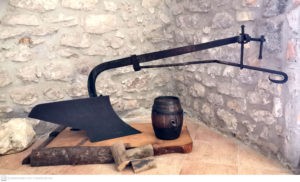
Some of the most characteristic elements of everyday life have been selected: the plow, which was essential for survival, and the church clock, which was a symbol of the passage of time –the work in the fields, the time of rest, prayer, entertainment, celebrations, seasons, years and death.
The first large hall, which in the early 1900s was a printing school run by the nuns who resided in the building, has five corners representing the following: work in the fields, livestock, crafts, work in the vineyard and the olive grove, and fire as an element indispensable to life and a symbol of the home.
In the second room, the domestic environment has been reconstructed and shows the work of the woman in the home. In an atmosphere deliberately left dim to leave room for the imagination, the visitor is led to reflect on how hard, tiring, and lacking in comfort life must have been, yet full of solid emotional ties.
The upstairs room is divided into two spaces dedicated to entertainment and choral and musical art, both linked to religious occasions and conviviality, from which the ancient band tradition and the polyphonic choir derive. The machinery and accessories on display evoke the atmosphere of the printed book, when printing was an arduous task, capable of bringing back childhood memories to many elderly citizens.
The main intent of the curators of the exhibition was to communicate to the visitor that this way of life represents our roots, and they must be cared for, cultivated, kept alive and handed down.
The Museum of Rural Life of Gavignano was founded in 2007 as the result of a project dedicated to the recovery and valorization of the local traditions of Gavignano and the surrounding area.
The objects that have been found and restored are on display at Palazzo Baronale. Corners have been created in eight sections representing life dedicated to work, the home and the care of kinfolk.
Some of the most characteristic elements of everyday life have been selected: the plow, which was essential for survival, and the church clock, which was a symbol of the passage of time –the work in the fields, the time of rest, prayer, entertainment, celebrations, seasons, years and death.
The first large hall, which in the early 1900s was a printing school run by the nuns who resided in the building, has five corners representing the following: work in the fields, livestock, crafts, work in the vineyard and the olive grove, and fire as an element indispensable to life and a symbol of the home.
In the second room, the domestic environment has been reconstructed and shows the work of the woman in the home. In an atmosphere deliberately left dim to leave room for the imagination, the visitor is led to reflect on how hard, tiring and lacking in comfort life must have been, yet full of solid emotional ties.
The upstairs room is divided into two spaces dedicated to entertainment and choral and musical art, both linked to religious occasions and conviviality, from which the ancient band tradition and the polyphonic choir derive. The machinery and accessories on display evoke the atmosphere of the printed book, when printing was an arduous task, capable of bringing back childhood memories to many elderly citizens.
The main intent of the curators of the exhibition was to communicate to the visitor that this way of life represents our roots, and they must be cared for, cultivated, kept alive and handed down.
Video
Galleria


Campagna fotografica realizzata nell’ambito del progetto “Oltre Roma” e finanziata dalla Regione Lazio, Avviso Pubblico “La cultura fa sistema 2021”