Historical-Artistic Museums
City of Cave Civic Museum
Via Cavour, 23
Cave
OPENING HOURS
Monday to Friday 9:00 AM – 7:00 PM
Saturday and Sunday 10:30 AM – 12:30 PM – 4:30 PM – 7:30 PM
INFORMATION
PHONE
+39 065745934
+39 069000841
EMAIL
museolorenzoferri@gmail.com
museocivicocave@gmail.com

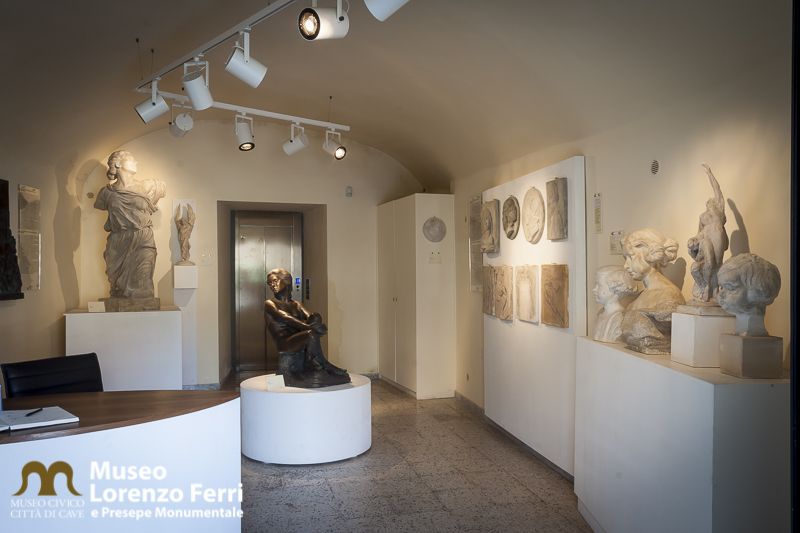
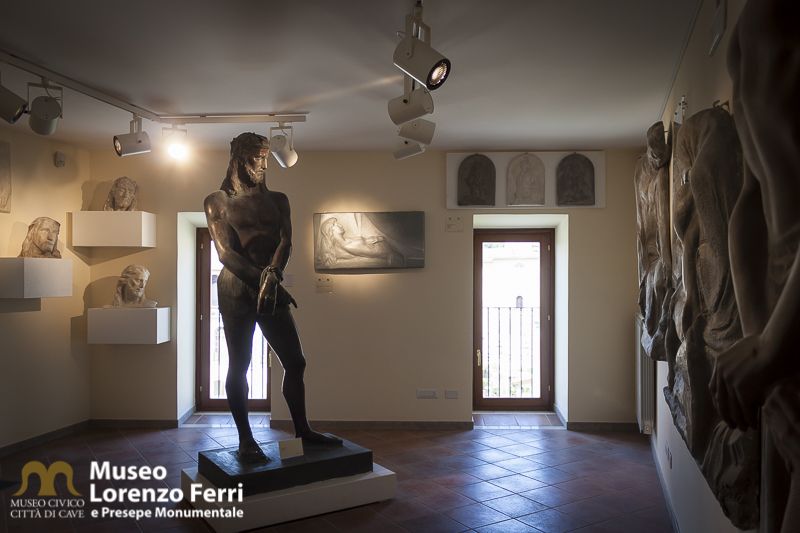
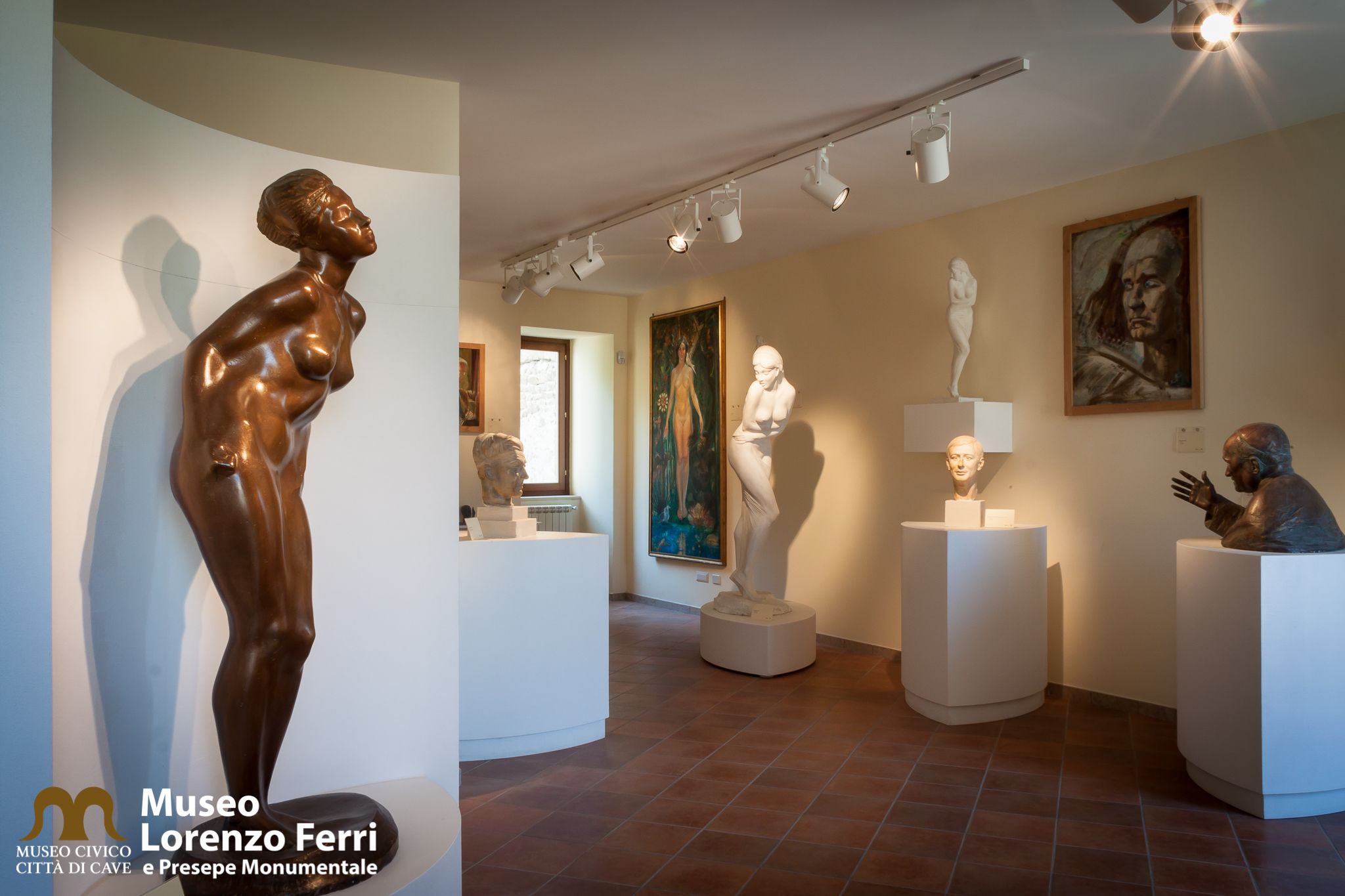
The Museum is located in two historical sites in the heart of the town and hosts, in its rooms, the Lorenzo Ferri Museum, dedicated to the sculptor, painter, restorer and sindonologist Lorenzo Ferri (1902-1975). The exhibit, inaugurated in 2012, is organized in three sections that retrace the most important artistic and spiritual events of the author’s life, between Rome and Cave, through works, studies and projects that prove the extent of his versatility and research.
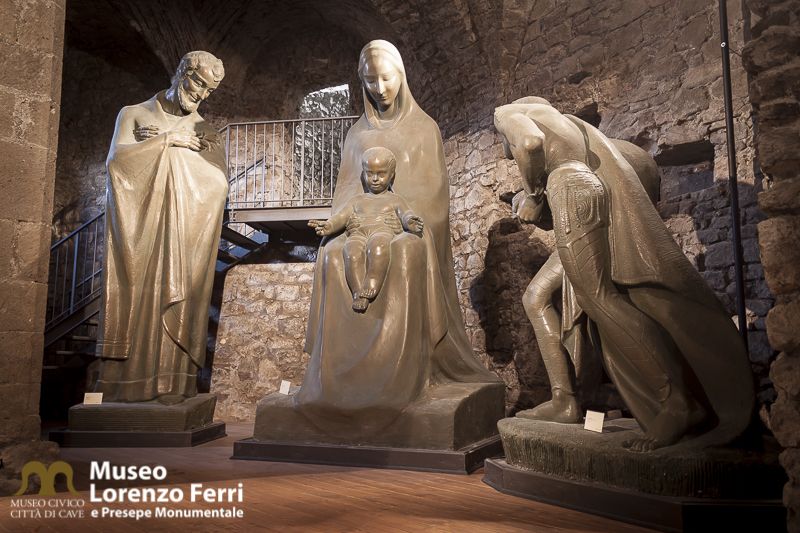
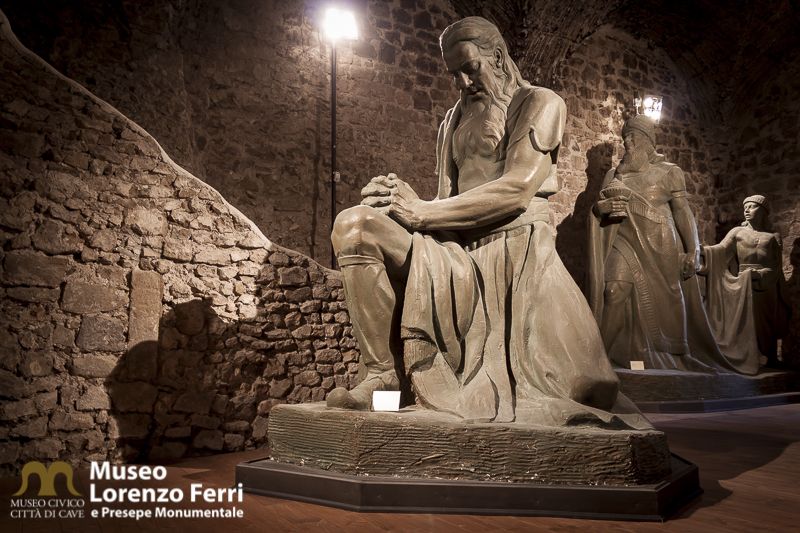
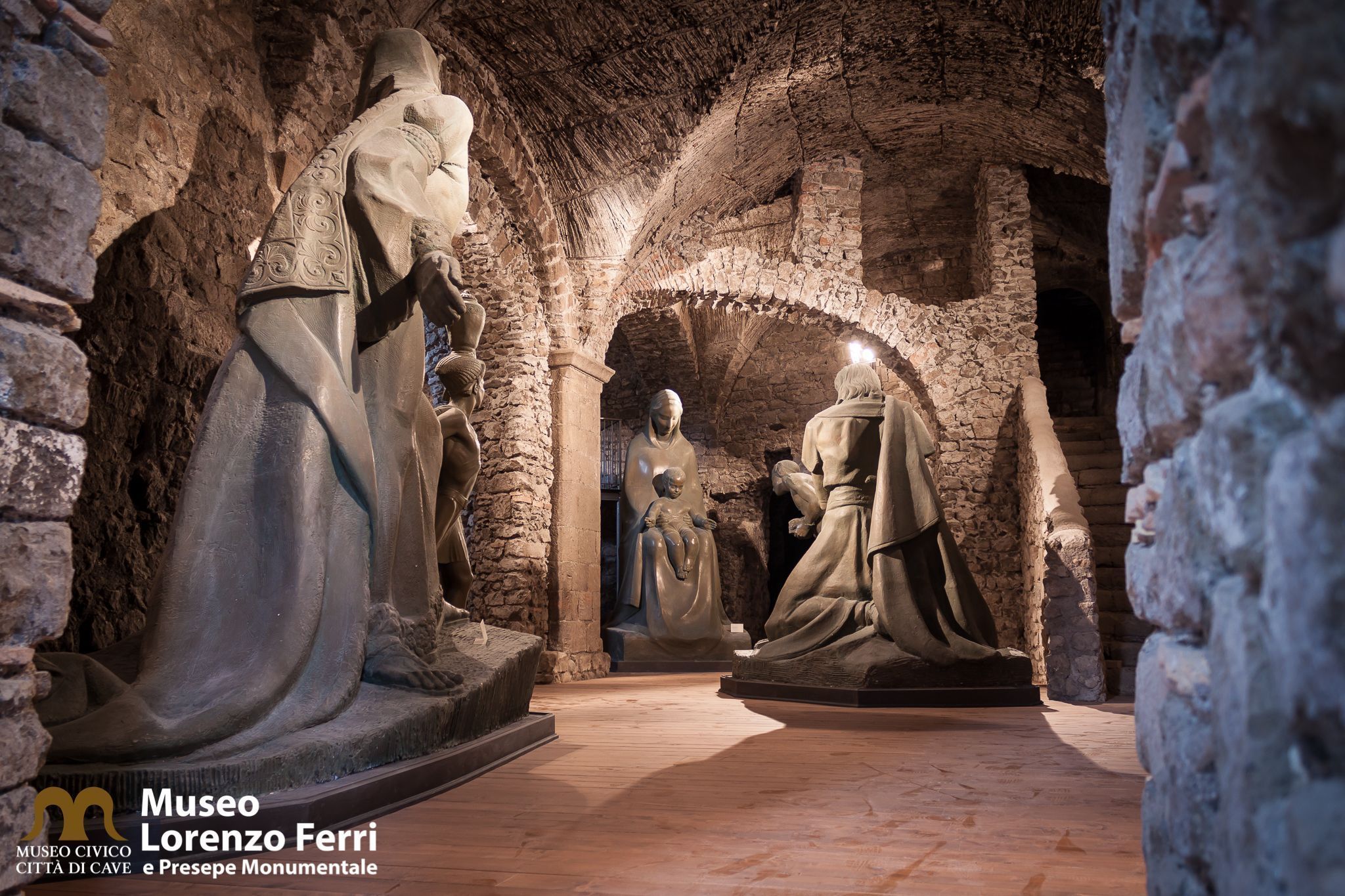
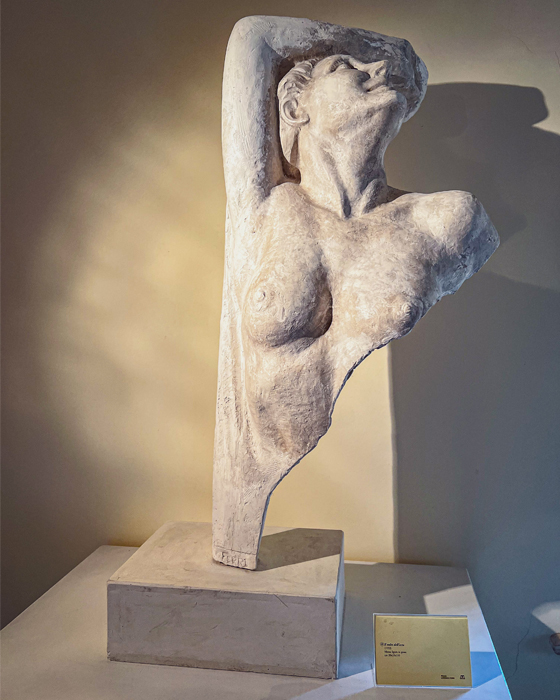
The old Mattei Hospital houses a plaster cast gallery, with pieces in plaster representative of the different phases of Ferri’s sculptoreal production: among these are the rough sketches for the roman statues of Trilussa and Giolitti, models of the Ecce Homo, Christ the Redeemer, Alfa-Omega Christ and the rilievo made for the bronze doors contest of the San Pietro Cathedral in Rome. The underground rooms of the Palazzo Comunale (Municipal Building), a former Augustinian Monastery, house the Sindonic section and the Presepe Monumentale : a massive nativity scene with statues over 4 meters tall, sculpted between 1947 and 1948 for the Padri Pallottini (a religious congregation) and designed to be placed in the roman church of Sant’Andrea della Valle. The sculptures in glazed plaster depict the Holy Family, the 3 Wise Men and their pages carrying gifts. In the adjacent room, the Sindonic section documents his research on the Holy Shroud, which culminated in the reconstruction of the body and face of the Man of the Shroud. Also displayed are some sketches made for the bronze door of the Collegiate of Santa Maria Assunta in Cave.
The museum’s exhibit will soon be enriched with two new thematic sections: one dedicated to traditional activities on the territory – like the cultivation of tobacco, chestnuts and silkworm breeding – and the other focused on the civic archeological collection. Both will add value to the tangible and intangible memory of this community, promoting inclusiveness and active participation.
Gallery